Fort Dearborn: Difference between revisions
J. Malcolm (talk | contribs) |
J. Malcolm (talk | contribs) No edit summary |
||
| Line 1: | Line 1: | ||
[[Category:Harbor Defenses of Portsmouth]] | [[Category:Harbor Defenses of Portsmouth]] | ||
Located in Rye New Hampshire the first military installations were built during WW1 which included a fire control station 1917 and searchlights 1920 | Located in Rye New Hampshire the first military installations were built during WW1 which included a fire control station 1917 and searchlights 1920. Fort Dearborn was built as a WW2 fortification for the [[:Category:Harbor Defenses of Portsmouth|Harbor Defenses of Portsmouth]]. No other existing Endicott fort could meet the new defense needs (Fort Foster had room for one battery). So it was decided in 1942 that the land between Odiornes Point and Frost Point would become the newest addition to Portsmouth defenses. In order to get this land they would need to remove the current residents and dwellings. So in 1942 the residents were given thirty days to pack their belongings and go elsewhere giving the government the first 200 acres of the reservation in 1943 (The second parcel was acquired later that year bringing the property to about 264 acres). The reservation was officially named Fort Dearborn in 1943 for Henry Dearborn. During this time the coastal highway would be closed for the fort and did not reopen until 1946. The first battery of four 155mm guns was built in 1942 while the others were under construction. All WW2 Post structures were demolished after the war aside from the TNT Building and a coupls remaining summer houses.<center><gallery widths="150" heights="150" caption="Fort Dearborn"> | ||
File:Fort dearborn Layout WW2.jpg|Fort Dearborn Layout | File:Fort dearborn Layout WW2.jpg|Fort Dearborn Layout | ||
File:Fort Dearborn Plans.jpg|Fort Dearborn Plan | File:Fort Dearborn Plans.jpg|Fort Dearborn Plan | ||
| Line 77: | Line 77: | ||
=== <u>Present Status</u> === | === <u>Present Status</u> === | ||
In 1946 the coastal highway reopened and a group of 101 men would operate Battery 204 until 1948. All guns were removed from the Fort and [[Pulpit Rock MR]] in 1948. All personnel left the fort and it was declared surplus in 1949. The original landowners from pre-war would never get their original property back. The air force used the property until 1968 and Battery 204 was a civil defense shelter until the air force left. The gun batteries were filled in 1980 with gravel to prevent access. The reservation officially became a state park in 1962 and a summer cottage was converted to the Seacoast Science Center in 1992. All the battery entrances were uncovered in 1988 except for the plotting room and ventilation on Battery 204. The park today is 331 acres and you can walk around all the former military batteries. Battery 204 has some painted 16 inch shells from Battery Seamen out on display. One was recently sent to the Halibut Point Fire Control Tower for their display. The magazines of the two batteries are closed (currently). Admission to the park is charged at the main gate. | In 1946 the coastal highway reopened and a group of 101 men would operate Battery 204 until 1948. All guns were removed from the Fort and [[Pulpit Rock MR]] in 1948. All personnel left the fort and it was declared surplus in 1949. The original landowners from pre-war would never get their original property back. The air force used the property until 1968 and Battery 204 was a civil defense shelter until the air force left. The gun batteries were filled in 1980 with gravel to prevent access. The reservation officially became a state park in 1962 and a summer cottage was converted to the Seacoast Science Center in 1992. All the battery entrances were uncovered in 1988 except for the plotting room and ventilation on Battery 204. The park today is 331 acres and you can walk around all the former military batteries. The breakwater at Frost point seen today was built in 1902 by the Corps of Engineers. Battery 204 has some painted 16 inch shells from Battery Seamen out on display. One was recently sent to the Halibut Point Fire Control Tower for their display. The magazines of the two batteries are closed (currently). Admission to the park is charged at the main gate. | ||
Revision as of 21:30, 23 November 2022
Located in Rye New Hampshire the first military installations were built during WW1 which included a fire control station 1917 and searchlights 1920. Fort Dearborn was built as a WW2 fortification for the Harbor Defenses of Portsmouth. No other existing Endicott fort could meet the new defense needs (Fort Foster had room for one battery). So it was decided in 1942 that the land between Odiornes Point and Frost Point would become the newest addition to Portsmouth defenses. In order to get this land they would need to remove the current residents and dwellings. So in 1942 the residents were given thirty days to pack their belongings and go elsewhere giving the government the first 200 acres of the reservation in 1943 (The second parcel was acquired later that year bringing the property to about 264 acres). The reservation was officially named Fort Dearborn in 1943 for Henry Dearborn. During this time the coastal highway would be closed for the fort and did not reopen until 1946. The first battery of four 155mm guns was built in 1942 while the others were under construction. All WW2 Post structures were demolished after the war aside from the TNT Building and a coupls remaining summer houses.
- Fort Dearborn
-
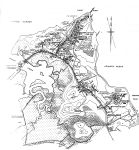 Fort Dearborn Layout
 -
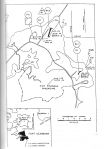 Fort Dearborn Plan
 -
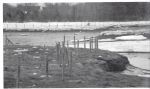 1942 Security Fencing
 -
Seacoast Science Center
-
Fort Dearborn FCT Pulpit Rock
-
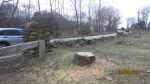 Pre War Stone Walls
 -
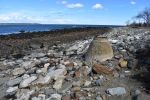 Fort Pump
 -
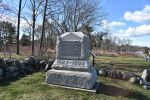 Founders Monument 1899
 -
 Summer Cottage Lot


Battery 155 Odiorne Point
Built in 1942 as a temporary battery of 155mm guns it was only used for the initial construction of the main batteries. Four magazines and a battery commanders station were built behind the emplacements and removed when the main batteries were finished in 1944. Today all that remains is the panama mounts for the guns although one is buried in brush and not visible.
- Battery 155 Odiornes Point
-
Emplacement One
-
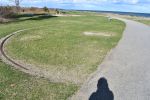 Emplacement Two
 -
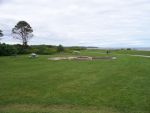 Emplacement Three Approach
 -
Emplacement Three
-
 Emplacement Four Locale


Battery 204
Construction started in 1942 on this six inch battery located at Odiornes Point behind the 155mm battery. Two shielded barbette guns were located on either side of a magazine structure covered with earth. The battery was completed in 1944 and had a battery commanders station built on top and accessed via a ladder from the magazines.The proposed name for this battery was to be Battery M. H. Barry but it was not formally named. Around the structure were various Anti Aircraft guns and Machine Guns. The battery remained active until the wars end in 1945.
- Battery 204
-
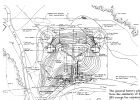 Battery 204 Plan
 -
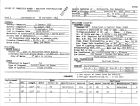 Battery 204 RCW
 -
Central Entrance
-
Vents
-
Emplacement One with 16 inch Shells
-
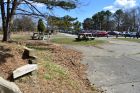 Emplacement One Approach
 -
Emplacement One
-
Emplacement Two Entrance
-
 Emplacement Two Electrical
 -
Emplacement Two
-
Top Access Stairs
-
BC Station
-
Vent


Battery 103/Seamen
Construction on this casemented 16 inch battery began in 1942 and was completed by 1944. It is located at Frost Point and was the largest guns to defend Portsmouth. The battery construction number was 103 but it was renamed to honor Colonel Claudius M. Seamen. The 25 mile range of the guns meant that Fire Control Towers needed to be used. They were located all the way from Halibut Point Massachusetts to Great Hill in Maine. It was painted to blend in with the surrounding environment and remnant of the paint can be seen today. Similar to Battery 204 the Battery commanders station was built atop the battery and was a side by side station for the Gun Group G1. A concrete Gun Group 1 building is located behind the battery. Due to the shock from the firing of these guns larger caliber batteries like this one were designed to have the plotting room a separate reinforced concrete casement covered with earth. Like battery 204 Anti Aircraft and Machine guns were located around the battery. Shields were added to the guns in 1946. During the only test firing of the gun in 1944 the shock from the gun damaged many windows of houses nearby but most notably of the Wentworth Hotel in New Castle. After the test firing the battery was but into caretaker status.
- Battery 103/Seamen
-
 Battery 103 Plan
 -
 Field of Fire
 -
 Ariel Image
 -
 Active Duty Images JP Wysong
 -
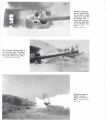 Battery 103 Guns JP Wysong
 -
 Plotting Room Plan
 -
Central Entrance
-
Emplacement One Entrance
-
Emplacement One Sealed Magazine Entrance
-
Generator Room
-
Gun Position
-
Front of the Emplacement
-
Original Paint
-
G1 and BC Station
-
Station Entrance
-
Original Woodwork
-
Instrument Mount One
-
Instrument Mount Two
-
Emplacement Two Entrance
-
Sealed Magazine Entrance
-
Emplacement Two Generator Interior
-
Emplacement Two
-
Plotting Room Entrance One
-
Interior Hall
-
Entrance Two
-
Vents
-
Vent
-
 G1 Post Approach
 -
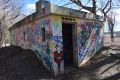 G1 Post
 -
 Original Door Remains
 -
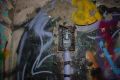 Electrical
 -
 Wall Mounts
 -
 Original Woodwork
 -
 Chimney Intake for a Stove


Present Status
In 1946 the coastal highway reopened and a group of 101 men would operate Battery 204 until 1948. All guns were removed from the Fort and Pulpit Rock MR in 1948. All personnel left the fort and it was declared surplus in 1949. The original landowners from pre-war would never get their original property back. The air force used the property until 1968 and Battery 204 was a civil defense shelter until the air force left. The gun batteries were filled in 1980 with gravel to prevent access. The reservation officially became a state park in 1962 and a summer cottage was converted to the Seacoast Science Center in 1992. All the battery entrances were uncovered in 1988 except for the plotting room and ventilation on Battery 204. The park today is 331 acres and you can walk around all the former military batteries. The breakwater at Frost point seen today was built in 1902 by the Corps of Engineers. Battery 204 has some painted 16 inch shells from Battery Seamen out on display. One was recently sent to the Halibut Point Fire Control Tower for their display. The magazines of the two batteries are closed (currently). Admission to the park is charged at the main gate.