Fort Williams: Difference between revisions
J. Malcolm (talk | contribs) m Wrote out most of page |
J. Malcolm (talk | contribs) |
||
| Line 6: | Line 6: | ||
== Endicott Era == | == Endicott Era == | ||
In 1894 construction began on the first Endicott battery, Battery DeHart in 1893. In 1903 as the fort was growing, an additional 76 acres of land was acquired for the fort in 1903. No permanent post buildings were built until 1898 in the first building phase (1898-1904). From 1909 to 1911 more post buildings were added with the inclusion of a large 208 man double barracks building. By the end of the last building phase there were Three Barracks, Nine married officers quarters and Six non commissioned officers quarters. Other essential post buildings were also built like a Post Exchange (Named the Canteen), Headquarters Building and a Hospital among others. The Fort was formally named Fort Williams in 1899 and in 1899 the 1858 Goddard Mansion was bought for Fort Williams as an Officers Club and married enlisted men barracks. A Mine Casement built in 1891 and modified in 1903 was built in the cliff at ships cove. This Mining complex included a tramway and Two Mine Observation Stations. One was located next to Battery Blair and was built in 1903. Another was built as a secondary station on top of Battery Keyes. The large caliber gun batteries were manned with companies of 80-100 men. Completed batteries were test fired in 1898. The fort had many luxuries that could be found at forts such as a chapel, a movie theater, a baseball field and recreation center with a swimming pool. In 1907 a large power station and transformer building would be built behind the barracks and fire station. A collection of Fire Control Stations was also located behind Battery Garesche in the woods. | In 1894 construction began on the first Endicott battery, Battery DeHart in 1893. In 1903 as the fort was growing, an additional 76 acres of land was acquired for the fort in 1903. No permanent post buildings were built until 1898 in the first building phase (1898-1904). From 1909 to 1911 more post buildings were added with the inclusion of a large 208 man double barracks building. By the end of the last building phase there were Three Barracks, Nine married officers quarters and Six non commissioned officers quarters. Other essential post buildings were also built like a Post Exchange (Named the Canteen), Headquarters Building and a Hospital among others. The Fort was formally named Fort Williams in 1899 and in 1899 the 1858 Goddard Mansion was bought for Fort Williams as an Officers Club and married enlisted men barracks. A Mine Casement built in 1891 and modified in 1903 was built in the cliff at ships cove. This Mining complex included a tramway and Two Mine Observation Stations. One was located next to Battery Blair and was built in 1903. Another was built as a secondary station on top of Battery Keyes. The large caliber gun batteries were manned with companies of 80-100 men. Completed batteries were test fired in 1898. The fort had many luxuries that could be found at forts such as a chapel, a movie theater, a baseball field and recreation center with a swimming pool. In 1907 a large power station and transformer building would be built behind the barracks and fire station. A collection of Fire Control Stations was also located behind Battery Garesche in the woods.<gallery mode="packed-hover" widths="200" heights="200"> | ||
File:Fort Williams NOAA (12).png|Mining Casement | |||
File:Fort Williams NOAA (13).png|Goddard Mansion | |||
File:Fort Williams NOAA (10).png|Barracks and baseball field | |||
File:Fort Williams NOAA (11).png|Hospital Location | |||
File:Fort Williams NOAA (5).png|Remaining Post Buildings | |||
File:Fort Williams NOAA (6).png|Officers Row | |||
File:Fort Williams NOAA (1).png|BOQ and FOQ | |||
</gallery> | |||
== Battery Blair == | == Battery Blair == | ||
[[File:Fort Williams NOAA (7).png|thumb|Battery Blair Ariel]] | |||
In 1901 construction began on Fort Williams largest battery. It would hold two 12-inch disappearing rifles.The battery was fully electrified and complete by 1903. The battery had electric shell hoists which were powered by a power station inside the battery and the central power station. The guns would be manually raised to the firing position and the shock of the blast would shoot it down to the loading position. The guns could fire a half-ton shell up to eight miles. This battery would be for the final blow on battleships and cruisers. The battery was used up until 1943 when the guns were dismounted and scrapped at an arsenal in 1944. A Battery Commanders and Plotting Station was built at the rear of the battery and connected with a concrete walkway. Today one gun emplacement is visible with emplacement #1 and the magazine level being buried. | In 1901 construction began on Fort Williams largest battery. It would hold two 12-inch disappearing rifles.The battery was fully electrified and complete by 1903. The battery had electric shell hoists which were powered by a power station inside the battery and the central power station. The guns would be manually raised to the firing position and the shock of the blast would shoot it down to the loading position. The guns could fire a half-ton shell up to eight miles. This battery would be for the final blow on battleships and cruisers. The battery was used up until 1943 when the guns were dismounted and scrapped at an arsenal in 1944. A Battery Commanders and Plotting Station was built at the rear of the battery and connected with a concrete walkway. Today one gun emplacement is visible with emplacement #1 and the magazine level being buried. | ||
== Battery Sullivan == | == Battery Sullivan == | ||
Construction began in 1894 on this 10-inch disappearing rifle battery. The battery was completed in 1896 with three guns and activated in 1898. It was named in 1903. In 1907 three Taylor-Raymond Shell Hoists were added in 1907 and Powder Hoists were added in 1912. The battery was fully electrified and featured an electric motor that would take the gun down from firing position. In 1918, the guns were dismounted for use in WWI but replaced with new guns in 1919. The battery was deactivated in 1929. The guns were scrapped in 1942. 155mm guns on | [[File:Fort Williams NOAA (9).png|left|thumb|Battery Dehart Ariel]] | ||
Construction began in 1894 on this 10-inch disappearing rifle battery. The battery was completed in 1896 with three guns and activated in 1898. It was named in 1903. In 1907 three Taylor-Raymond Shell Hoists were added in 1907 and Powder Hoists were added in 1912. The battery was fully electrified and featured an electric motor that would take the gun down from firing position. In 1918, the guns were dismounted for use in WWI but replaced with new guns in 1919. The battery was deactivated in 1929. The guns were scrapped in 1942. 155mm guns on Panama mounts were located in front of the battery until 1943. | |||
== Battery DeHart == | == Battery DeHart == | ||
[[File:Fort Williams NOAA (8).png|thumb|Battery Dehart Ariel]] | |||
This battery was the first to start construction at fort Williams in 1893. It was fitted with two 10-inch disappearing rifles. The battery was completed in 1897 and activated in 1898 then named in 1903. Similar to Battery Sullivan, it had two shell hoists added in 1907 and powder hoists in 1912. It also featured electric motors to bring the gun from firing position to loading position. This battery was fully electric and got its power from the 1907 Central power station. The guns were to be dismounted and shipped off in 1918 but they were never removed as they were ordered back before their removal. In 1934 the battery was placed on reduced status and in 1942 the guns were scrapped and the battery was deactivated. | This battery was the first to start construction at fort Williams in 1893. It was fitted with two 10-inch disappearing rifles. The battery was completed in 1897 and activated in 1898 then named in 1903. Similar to Battery Sullivan, it had two shell hoists added in 1907 and powder hoists in 1912. It also featured electric motors to bring the gun from firing position to loading position. This battery was fully electric and got its power from the 1907 Central power station. The guns were to be dismounted and shipped off in 1918 but they were never removed as they were ordered back before their removal. In 1934 the battery was placed on reduced status and in 1942 the guns were scrapped and the battery was deactivated. | ||
== Battery Garesche == | == Battery Garesche == | ||
Construction began in 1904 and was the last battery to be completed at Fort Williams in 1906. It was named before construction even started in 1903. This battery had two 6-inch disappearing rifles. No shell or powder hoists were required because the battery was one story. Electrical power was furnished from the power station inside Battery Blair that powered many of the gun batteries at the fort. In 1917 the guns were removed for use in WWI. One gun actually made it to France to be used as a railway gun. The guns were never returned and the carriages were scrapped in 1920 and the battery was deactivated in 1929. | [[File:Fort Williams NOAA (4).png|left|thumb|Battery Garesche Airel]] | ||
Construction began in 1904 and was the last battery to be completed at Fort Williams in 1906. It was named before construction even started in 1903. This battery had two 6-inch disappearing rifles. No shell or powder hoists were required because the battery was one story. Electrical power was furnished from the power station inside Battery Blair that powered many of the gun batteries at the fort. In 1917 the guns were removed for use in WWI. One gun actually made it to France to be used as a railway gun. The guns were never returned, and the carriages were scrapped in 1920 and the battery was deactivated in 1929. | |||
== Battery Hobart == | == Battery Hobart == | ||
[[File:Fort Williams NOAA (15).png|thumb|Battery Hobart Ariel]] | |||
This battery was started in 1898 and completed in 1900. It had one 6-inch armstrong gun and was built atop the remains of the 1870s battery. It was named in 1903 and powered by the 1907 central power plant. The gun was dismounted and sent to Hawaii in 1913. The battery was officially deactivated in 1929 many years after it was scrapped. | This battery was started in 1898 and completed in 1900. It had one 6-inch armstrong gun and was built atop the remains of the 1870s battery. It was named in 1903 and powered by the 1907 central power plant. The gun was dismounted and sent to Hawaii in 1913. The battery was officially deactivated in 1929 many years after it was scrapped. | ||
== Battery Keyes == | == Battery Keyes == | ||
This 3-inch battery was built in 1903 and completed in 1905. It was built to protect the minefield with its two rapid fire pedestal mounted guns. The battery was named in 1904 and was fully electric. Power was supplied by the 1907 central power station. On top of the battery is the secondary minefield observation station which was used in conjunction with the Mine Casement nearby to locate mine to be detonated. It is the only example of plaster and stucco construction | [[File:Fort Williams NOAA (14).png|left|thumb|Battery Keyes Ariel]] | ||
This 3-inch battery was built in 1903 and completed in 1905. It was built to protect the minefield with its two rapid fire pedestal mounted guns. The battery was named in 1904 and was fully electric. Power was supplied by the 1907 central power station. On top of the battery is the secondary minefield observation station which was used in conjunction with the Mine Casement nearby to locate mine to be detonated. It is the only example of plaster and stucco construction in good condition. n 1920 a CRF Station was added next to the battery. t was the only battery at Fort Williams to remain active through WWII. During WWII it was used in conjunction with the HECP to fire upon unfriendly ships that may not be welcome into the harbor. The guns were removed after the war ended in 1945. | |||
== WWI == | == WWI == | ||
The guns of the 10-inch and 6-inch batteries were to be sent to France during WWI. Of all the guns to be sent only on actually made it to France and it was from Battery Garesche. In the 1920s concrete observation station were added at Kitty Point near officers row. A disappearing searchlight was added behind Battery Garesche. In 1920 a protected switchboard bunker was built next to the 1907 central power station. | The guns of the 10-inch and 6-inch batteries were to be sent to France during WWI. Of all the guns to be sent only on actually made it to France and it was from Battery Garesche. In the 1920s concrete observation station were added at Kitty Point near officers row. A disappearing searchlight was added behind Battery Garesche. In 1920 a protected switchboard bunker was built next to the 1907 central power station.<gallery mode="nolines"> | ||
File:Fort Williams NOAA (2).png|Officers Garage | |||
File:Fort Williams NOAA (3).png|Kitty Point buried Observation Stations | |||
</gallery> | |||
== WWII == | == WWII == | ||
Revision as of 20:20, 14 September 2023
Fort Williams is located in Cape Elizabeth Maine on Cape Cottage. It was used from 1872-1962
1870s Era
In 1872 land was acquired from property owners to create the Portland Head Military Reservation. This consisted of a 17-gun battery known as the Battery at Portland Head built from 1873 to 1876 when the project was abandoned.
Endicott Era
In 1894 construction began on the first Endicott battery, Battery DeHart in 1893. In 1903 as the fort was growing, an additional 76 acres of land was acquired for the fort in 1903. No permanent post buildings were built until 1898 in the first building phase (1898-1904). From 1909 to 1911 more post buildings were added with the inclusion of a large 208 man double barracks building. By the end of the last building phase there were Three Barracks, Nine married officers quarters and Six non commissioned officers quarters. Other essential post buildings were also built like a Post Exchange (Named the Canteen), Headquarters Building and a Hospital among others. The Fort was formally named Fort Williams in 1899 and in 1899 the 1858 Goddard Mansion was bought for Fort Williams as an Officers Club and married enlisted men barracks. A Mine Casement built in 1891 and modified in 1903 was built in the cliff at ships cove. This Mining complex included a tramway and Two Mine Observation Stations. One was located next to Battery Blair and was built in 1903. Another was built as a secondary station on top of Battery Keyes. The large caliber gun batteries were manned with companies of 80-100 men. Completed batteries were test fired in 1898. The fort had many luxuries that could be found at forts such as a chapel, a movie theater, a baseball field and recreation center with a swimming pool. In 1907 a large power station and transformer building would be built behind the barracks and fire station. A collection of Fire Control Stations was also located behind Battery Garesche in the woods.
-
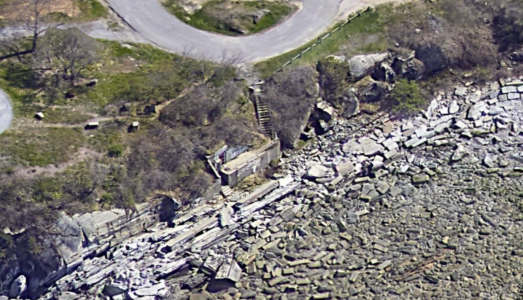 Mining Casement
 -
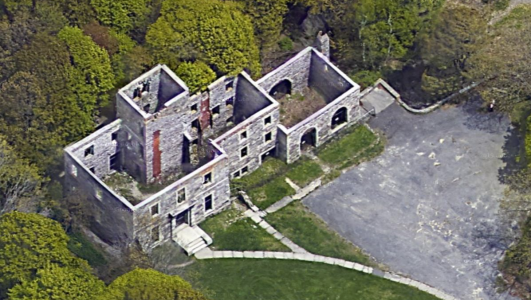 Goddard Mansion
 -
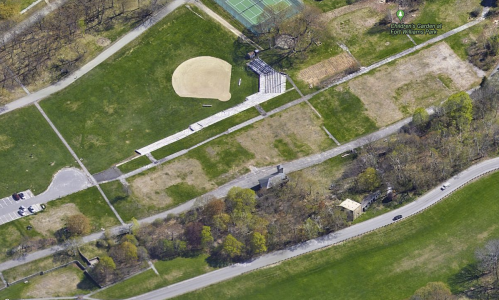 Barracks and baseball field
 -
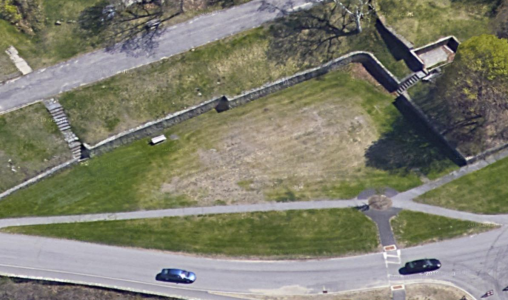 Hospital Location
 -
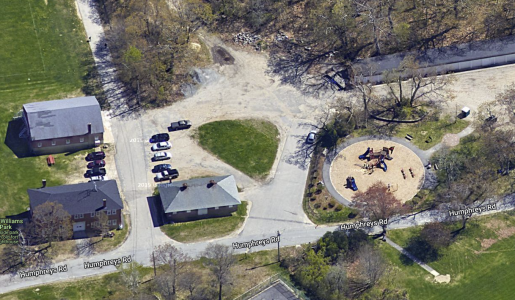 Remaining Post Buildings
 -
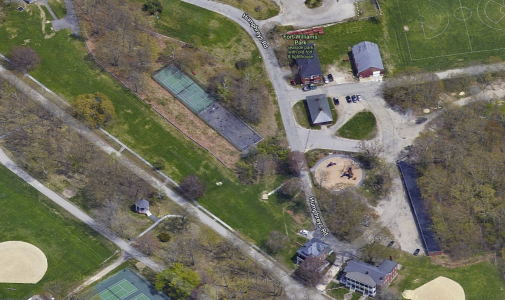 Officers Row
 -
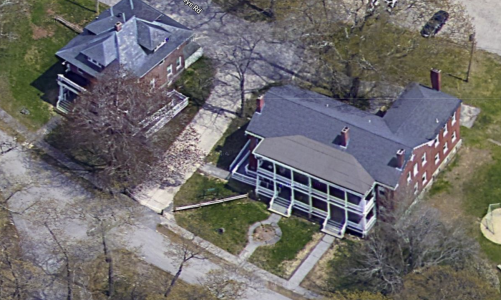 BOQ and FOQ
.png)
.png)
.png)
.png)
.png)
.png)
.png)
Battery Blair
.png)
In 1901 construction began on Fort Williams largest battery. It would hold two 12-inch disappearing rifles.The battery was fully electrified and complete by 1903. The battery had electric shell hoists which were powered by a power station inside the battery and the central power station. The guns would be manually raised to the firing position and the shock of the blast would shoot it down to the loading position. The guns could fire a half-ton shell up to eight miles. This battery would be for the final blow on battleships and cruisers. The battery was used up until 1943 when the guns were dismounted and scrapped at an arsenal in 1944. A Battery Commanders and Plotting Station was built at the rear of the battery and connected with a concrete walkway. Today one gun emplacement is visible with emplacement #1 and the magazine level being buried.
Battery Sullivan
.png)
Construction began in 1894 on this 10-inch disappearing rifle battery. The battery was completed in 1896 with three guns and activated in 1898. It was named in 1903. In 1907 three Taylor-Raymond Shell Hoists were added in 1907 and Powder Hoists were added in 1912. The battery was fully electrified and featured an electric motor that would take the gun down from firing position. In 1918, the guns were dismounted for use in WWI but replaced with new guns in 1919. The battery was deactivated in 1929. The guns were scrapped in 1942. 155mm guns on Panama mounts were located in front of the battery until 1943.
Battery DeHart
.png)
This battery was the first to start construction at fort Williams in 1893. It was fitted with two 10-inch disappearing rifles. The battery was completed in 1897 and activated in 1898 then named in 1903. Similar to Battery Sullivan, it had two shell hoists added in 1907 and powder hoists in 1912. It also featured electric motors to bring the gun from firing position to loading position. This battery was fully electric and got its power from the 1907 Central power station. The guns were to be dismounted and shipped off in 1918 but they were never removed as they were ordered back before their removal. In 1934 the battery was placed on reduced status and in 1942 the guns were scrapped and the battery was deactivated.
Battery Garesche
.png)
Construction began in 1904 and was the last battery to be completed at Fort Williams in 1906. It was named before construction even started in 1903. This battery had two 6-inch disappearing rifles. No shell or powder hoists were required because the battery was one story. Electrical power was furnished from the power station inside Battery Blair that powered many of the gun batteries at the fort. In 1917 the guns were removed for use in WWI. One gun actually made it to France to be used as a railway gun. The guns were never returned, and the carriages were scrapped in 1920 and the battery was deactivated in 1929.
Battery Hobart
.png)
This battery was started in 1898 and completed in 1900. It had one 6-inch armstrong gun and was built atop the remains of the 1870s battery. It was named in 1903 and powered by the 1907 central power plant. The gun was dismounted and sent to Hawaii in 1913. The battery was officially deactivated in 1929 many years after it was scrapped.
Battery Keyes
.png)
This 3-inch battery was built in 1903 and completed in 1905. It was built to protect the minefield with its two rapid fire pedestal mounted guns. The battery was named in 1904 and was fully electric. Power was supplied by the 1907 central power station. On top of the battery is the secondary minefield observation station which was used in conjunction with the Mine Casement nearby to locate mine to be detonated. It is the only example of plaster and stucco construction in good condition. n 1920 a CRF Station was added next to the battery. t was the only battery at Fort Williams to remain active through WWII. During WWII it was used in conjunction with the HECP to fire upon unfriendly ships that may not be welcome into the harbor. The guns were removed after the war ended in 1945.
WWI
The guns of the 10-inch and 6-inch batteries were to be sent to France during WWI. Of all the guns to be sent only on actually made it to France and it was from Battery Garesche. In the 1920s concrete observation station were added at Kitty Point near officers row. A disappearing searchlight was added behind Battery Garesche. In 1920 a protected switchboard bunker was built next to the 1907 central power station.
-
 Officers Garage
 -
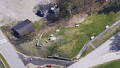 Kitty Point buried Observation Stations
.png)
.png)
WWII
The remaining large caliber batteries were all deactivated by 1944 and Battery Blair was the last to be test fired right after Pearl Harbor in 1941. The shock of the fired 14 shells blew out garage doors at the lighthouse and around the neighborhoods nearby. The only gun battery added to Fort Williams was Battery AMTB 961. During WWII Fort Williams was the control hub of Portland Harbor. It housed the HECP and HDCP on top of Kitty Point inside one of the 1920 observation stations. The mine casement at Fort Williams was used during WWII but after the mine tramway was destroyed by a storm in 1938 the planting was moved to Fort Preble. The mine casement served mines 1-8 in Portland Harbor while the larger mine casement at Peaks Island MR served mine groups 9-24. Mine explosive and shell storage was at Fort McKinley inside a warehouse and abandoned batteries. The fort was designated Location 160 at the beginning of WWII and was manned by the 240th Coast Artillery from 1939-1945.
Battery AMTB 961
Construction began in 1943 on this 90mm fixed gun battery. There were two fixed guns and two mobile guns. Two magazines were built along with two generator buildings. A Battery Commanders Station was built in between the magazines. The guns had a range of 4.5 miles and were for sinking high speed boats. 30 men were needed for the operation of the two fixed guns. The area where the magazines were located is still visible on some Ariel images.
Present
In 1946 the last battery was deactivated at the fort which was Battery AMTB 961. From 1950-51 a temporary radar was here. The fort spent the rest of its life as a logistics and administrative center for all of Maine. In the 1950s part of one of Battery Keyes emplacements was demolished by the national guard. The fort was formally deactivated June 30th, 1962 and in 1964 it was bought by the town of Cape Elizabeth for 200,000. It sat dormant for almost a decade after no plan was accepted for the fort. In 1973 demolition started on the structures at the fort. In 1973 the main Mine Observation station was razed and most other buildings were razed from 1974-76. The interior of the Goddard Mansion was partially burned by arsonists in 1975 and the chapel was completely destroyed also in 1975. Brick buildings were destroyed by the Cape Elizabeth Fire Department and the US Army Corps of Engineers. A massive sewer project in 1975 generated enough fill to bury all the large caliber batteries at the fort to make them safer. This fill was also used to bury two of the observation stations at Kitty Point. The other had its roof caved in and filled with roof debris. Only two batteries remain fully exposed (Battery Hobart had its magazines buried but the emplacement is still visible). Before 1975 there were plans to turn the fort into a college campus but no advances were made. The fort was dedicated as Fort Williams Park in 1979. In 1981 the Goddard mansion was gutted by controlled fire and the basement was filled. Up until 1990 the Mine Casement was used a civil defense shelter. Today some of the post buildings remain such as the fire station, a storehouse, a garage for officers cars, magazine, field officers quarters and bachelors officer quarters. Today the fort is a public park with no admission fee. The Portland Head Lighthouse houses a museum n the keepers quarters. Battery Blair has been turned into a memorial and plans from 2009 to excavate it have not seen fruition. In 2022 the Cape Elizabeth Historical Preservation Society moved into the bachelors officers quarters.
SOURCES and REFERENCES
Cape Elizabeth Historical Preservation Society
North American Forts/American Forts Network
Fort Williams (Maine) Wikipedia